
There has been another major breach of the Internet by AI hackers!
They are attacking major corporations and governments.
Individuals will be next.
Your first priority is to protect passwords.
If not today, when?
There has been another major breach of the Internet by AI hackers!
They are attacking major corporations and governments.
Individuals will be next.
Your first priority is to protect passwords.
If not today, when?

It is a question being asked these days.
Should he, would he give it his best regardless of his present pay plan?
And how about us.
What do we do when we’re unhappy with ours?
In every business deal there is always a factor called LEVERAGE!
Who has the LEVERAGE (power) the employer or employee?
The employer usually has it except when your employer doesn’t want to LOSE YOU!
So, you may gain LEVERAGE by always working hard and giving it your best each day.
You might take the LEVERAGE away from your employer.
PLAY HARD SAM!
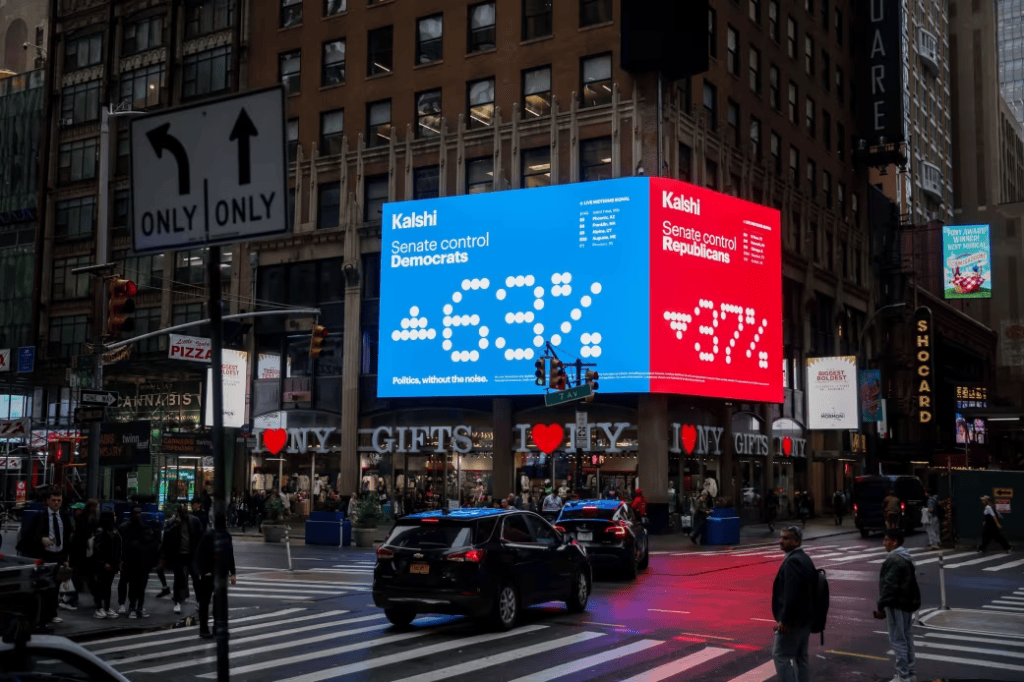
Prediction Markets have surpassed $1.4 billion in trading volume as Election Day fast approaches, according to a new CNN analysis.
This year has seen massive growth in the prediction industry, where people can bet on real-world events like sports, entertainment and the weather.
While small-scale election markets have been around for a while, they gained traction before the 2024 presidential election and have seen huge numbers for the 2026 midterms.
Kalshi, the biggest US prediction company, has seen nearly $1.1 billion in trading volume on markets related to the midterms, according to a spokesperson.
This includes markets about individual race outcomes, turnout numbers, prominent endorsements, whether candidates will debate, what will be said at campaign rallies and much more. (CNN)
CRAZY!
It doesn’t have to be a BIG surprise.
It demonstrates, however, that you were thinking of the other person.
When is the last time you surprised a loved one or a friend?
It doesn’t have to be expensive.
It’s the thought that counts!
If not today, when?
Most countries are not a Democracy!
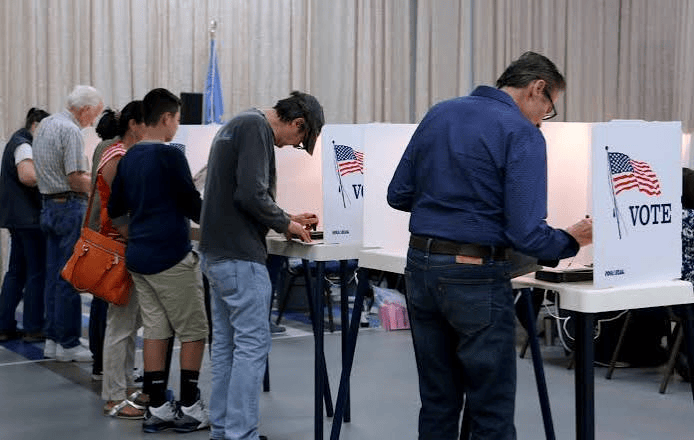
On November 3rd you have an opportunity to have your voice heard in a voting booth.
Our Democracy is under attack.
Don’t miss this chance to have your voice heard loud and clear.
Absentee ballots are now available in your township.
Pick one up today and vote!
If not today, when?

People are not always comfortable telling the truth.
They are afraid the other person doesn’t want to hear it.
A lie, however, does more damage to a relationship.
Maybe not immediately, but when the lie is discovered.
Truth and trust go hand-in-hand.
You can’t have one without the other.
When talking about truth, the issue of self-respect comes into play.
You can only boost your self-respect if people trust you.
It’s not complicated, but very important for your future happiness!
Always speak the truth!
If not today, when?

You lift weights at the gym and walk several miles for exercise, but how easily can you get up from the floor?
What about rising from a low chair without pushing off with your hands?
These ordinary movements can reveal aspects of fitness that aren’t always obvious during a workout.
Changing levels by getting up and sitting down requires your muscles, joints and nervous system to coordinate strength,
Getting up from a chair is often the cause of falling. (CNN)
It is important to practice getting up from a chair.
If not today, when?

You are being paid to get results.
Every business is under stress today.
Competition is fierce in the marketplace.
Your company and you must outperform its competitors.
What are you doing to make that happen?
Your company won’t suceed by just “getting by” and neither will you.
Are you a problem solver?
Do you propose new ideas to solve old problems?
Your employer is looking to you to lead the way!
If not today, when?

One of our sons and daughter-in-law are celebrating their 35th wedding anniversary today!
The magic of their marriage is that it is a true partnership..
Each partner has an equal voice in all activities.
And because each person has a unique point-of-view, the ultimate decision is more beneficial for the marriage.
This is actually how a partnership should function.
If one of the partners is seeking dominance over the other, continuous friction is the outcome.
And this friction deprives the marriage of equal creativity from both.
So, a free flow of input from both partners permits the marriage to function at peak capacity!
Happy 35th anniversary!

Each day of our lives should be filled with gratitude.
I am not naive about the fact that we all have daily challenges.
But, we must keep our lives in perspective when looking at the lives of others.
Everyone has a burden of some magnitude.
The great majority of people in the world don’t have:
SAFETY
CLEAN WATER
ACCESS TO HEALTH CARE
A SHELTER OF THEIR OWN
AN EDUCATION
FREEDOM FROM DISEASE
HOPE FOR THE FUTURE
So, let’s be grateful each day!

