
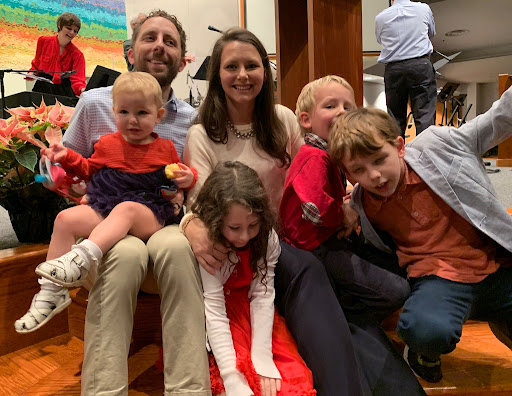
Sunday at 10:00 a.m. is Family Mass at our Church. All families with children of any age are invited along with all of the other parishioners.
We do not have what used to be called a “cry room” where parents took small children to separate them from the congregation.
Personal experience taught us that there was little point in going to Mass if you had to spend the time in those rooms!
Sometimes it gets a little rowdy. On occasion our pastor has stopped and referred to the noise as “our future choir.”
It is NOT a good time for serious meditation.
It IS a good time for community prayer and singing.
For those of us who no longer have children with us, it is often a time of smiling, waving or empathizing with younger parents who are exhausted when Mass is over.
Above all, it is a good time for our very large family to be celebrating and thanking God together.









 ifnottodaywhen.blog